 Bosco
Bosco Gurin lies beneath the Italian border ridge in Ticino, and its isolated position at the head of the Val Rovana has preserved a distinct Walser identity. Officially known as Bosco/Gurin, it is Ticino’s only German-speaking municipality. Walser settlers from the neighbouring Formazza Valley established the village in the 13th century, and its compact core retains dark timber houses and stone buildings suited to a high-Alpine setting. The local Gurin dialect belongs to the Walser German group, while the Walserhaus Gurin museum records this unusual cultural tradition. Above the settlement, mountain pastures, larch woods and steep slopes rise towards the border range; the Rovana valley descends towards Cevio and the Maggia Valley.
Generated by AI

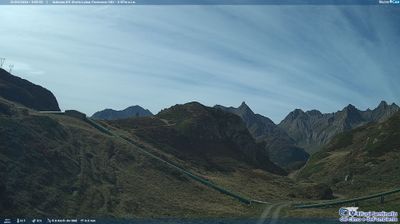
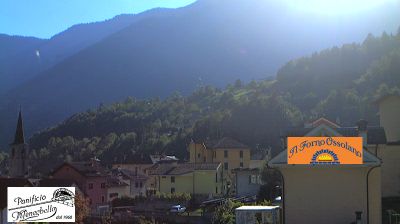
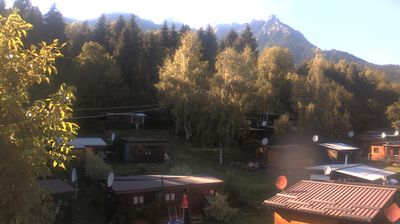
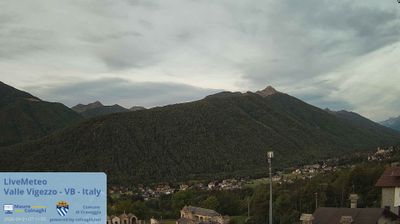
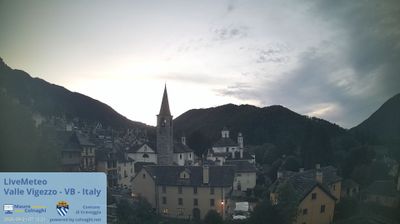

The landscape around Bosco Gurin is a high Alpine valley of steep slopes and long winters, which has shaped both the compact settlement and a local economy tied to mountain farming and seasonal tourism. At the head of the Val di Bosco, above the Rovana valley in Ticino, the community preserves a rare linguistic identity: it is the canton’s only German-speaking Walser settlement. Walser settlers arrived from Valais in the 13th century, and their Gurin German dialect remains part of local life. Timber houses and the Walserhaus Gurin museum give substance to that heritage, while the surrounding slopes support hiking in summer and skiing in winter. Browse other webcams across Ticino and the Rovana valley to place this Alpine setting in a wider geographic context.
1 webcam
Ticino combines high Alpine terrain with a distinctly Italian-speaking character in a way that reflects its position between the Swiss Alps and northern Italy. Lake Maggiore and Lake Lugano lend a lakeside dimension to a canton otherwise shaped by steep valleys, including the Maggia and Verzasca. Bellinzona, the cantonal capital, is marked by three medieval castles whose defensive complex is listed by UNESCO. In Locarno, Piazza Grande is internationally known as the principal venue of the Locarno Film Festival. South of the Gotthard, major rail and road routes have long connected central Europe with the Italian plain. View additional webcams nearby to better understand how Ticino relates to the Alpine valleys and lakes around it.
68 webcams
Switzerland stretches from the Jura Mountains in the northwest to the Alps in the south, encompassing a central plateau of cities, farms and lakes. The Rhine rises in the Swiss Alps, while Lake Geneva forms part of the country’s southwestern border. Zürich, Geneva and Basel are major urban centres, yet mountain railways and passes remain central to how many regions are experienced. Four national languages—German, French, Italian and Romansh—reflect Switzerland’s distinct cantonal identities. The Matterhorn above Zermatt is among Europe’s most recognisable peaks, and the 1291 Federal Charter is closely associated with the country’s founding tradition. Continue through nearby webcams to explore different parts of Switzerland.
1.5K webcams