 Eisenberg: Zell - Weißbach

The Allgäu Alps define the setting of Eisenberg — their foothills give the scattered settlements of Weißbach and Zell a broad agricultural horizon above the Ostallgäu. Eisenberg is a Bavarian municipality south of Füssen, composed of small hamlets among meadows and woodland rather than a single compact town centre. Its defining historical landmarks are the neighbouring ruins of Eisenberg Castle and Hohenfreyberg Castle, which occupy prominent hills above the villages. Hohenfreyberg was built in the 15th century by Friedrich von Freyberg and ranks among the region’s important late-medieval castle sites. Working farmland, wooded ridges and the Alpine foothills place Eisenberg firmly within the cultural landscape of the Allgäu.
Generated by AI



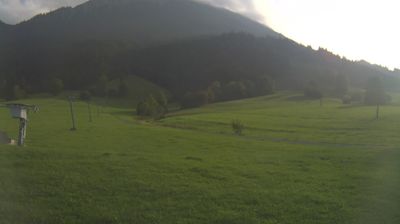
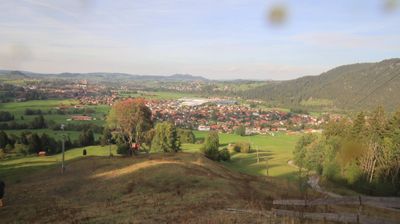

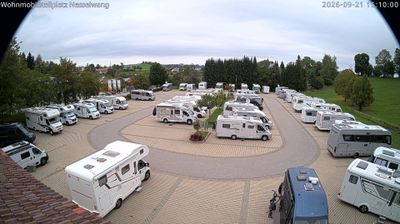

Eisenberg lies along the Vils valley, where the rolling foothills of the Allgäu rise toward the Bavarian Alps near Austria. The dispersed Ostallgäu municipality is defined by the ruins of Eisenberg Castle and nearby Hohenfreyberg Castle, medieval hilltop strongholds overlooking the valley. Their surviving walls recall a time when fortified seats shaped this Alpine border region. Farms and small hamlets occupy the slopes below, while Füssen and the royal castles of Hohenschwangau and Neuschwanstein form part of the wider Allgäu cultural landscape. View additional webcams nearby to better understand how Eisenberg relates to the Vils valley and the Allgäu foothills.
1 webcam
Built around the early medieval Duchy of Bavaria, Bavaria grew into Germany’s largest federal state. The Danube crosses its broad centre, while the Bavarian Alps form its southern edge and include the Zugspitze, Germany’s highest mountain. Munich is the state capital and the home of Oktoberfest, a festival rooted in an 1810 royal wedding. Beyond the metropolis, Franconia’s vineyards, Swabian towns and Alpine resorts reveal how varied this part of Germany can be. Browse additional webcams from the surrounding area to extend your view of Bavaria.
885 webcams
Germany stretches from the North Sea and Baltic Sea coasts to the Alps on its southern border, encompassing northern plains, river valleys and forested uplands. The Rhine, Danube and Elbe have long connected its regions, while the Black Forest and Bavarian Alps give the south a more dramatic relief. Berlin’s Brandenburg Gate and Museum Island reflect the capital’s role in German history and culture. Cologne Cathedral, a UNESCO World Heritage Site, rises above the Rhine, and the Bauhaus movement, founded in Weimar in 1919, transformed modern design far beyond Germany. Regional cooking, Christmas markets and brewing traditions bring further character to daily life. Browse additional webcams from the surrounding area to extend your view of Germany.
2.8K webcams