 Ilmenau: Ilmenauer Teiche
Ilmenau straddles the Ilm on the northern edge of the Thuringian Forest, a position that supported centuries of mining and now places this university town between wooded hills and central German uplands. The Ilmenauer Teiche form a group of ponds set among meadows and mature trees, giving the town a notably green edge. Mining shaped Ilmenau’s economy for generations, while the Technical University of Ilmenau remains central to its modern identity. Johann Wolfgang von Goethe was closely associated with the town; in 1780 he wrote the poem “Wanderer’s Nightsong” at the hunting lodge on nearby Kickelhahn.
Generated by AI

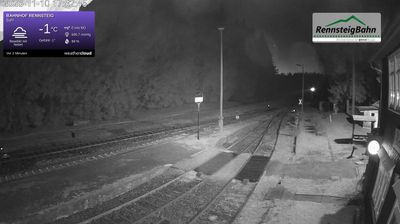
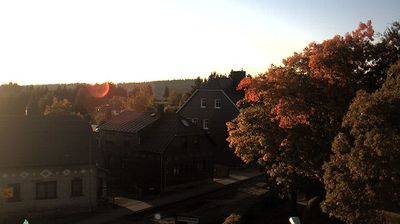

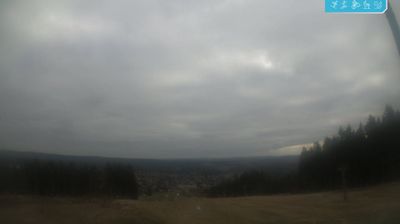


Ilmenau has served as a mining town in Thuringia since the Middle Ages. Set on the Ilm River at the northern edge of the Thuringian Forest, it developed around deposits of silver, copper and other minerals; mining shaped local life for centuries. Johann Wolfgang von Goethe was closely associated with the town and wrote “Wanderer’s Nightsong” on nearby Kickelhahn in 1780. Ilmenau also became known for glassmaking and porcelain production, industries that broadened its economy beyond the mines. Forest paths and the river valley place the town firmly in central Germany’s upland country. Continue with other webcams from the area to see how this part of Thuringia connects regionally.
3 webcams
Thuringia has served as a cultural crossroads within central Germany since the Middle Ages. Its varied terrain runs from the wooded ridges of the Thuringian Forest to the Saale valley in the east, with the long-distance Rennsteig trail following the forest’s crest. Erfurt, the state capital, preserves a historic centre marked by the cathedral and the Krämerbrücke, a bridge lined with inhabited buildings. Weimar is closely associated with Goethe and Schiller and with the Bauhaus movement, while Wartburg Castle near Eisenach recalls the region’s medieval past. Browse additional webcams from the surrounding area to extend your view of Thuringia.
77 webcams
Germany stretches from the North Sea and Baltic Sea coasts to the Alps on its southern border, encompassing northern plains, river valleys and forested uplands. The Rhine, Danube and Elbe have long connected its regions, while the Black Forest and Bavarian Alps give the south a more dramatic relief. Berlin’s Brandenburg Gate and Museum Island reflect the capital’s role in German history and culture. Cologne Cathedral, a UNESCO World Heritage Site, rises above the Rhine, and the Bauhaus movement, founded in Weimar in 1919, transformed modern design far beyond Germany. Regional cooking, Christmas markets and brewing traditions bring further character to daily life. Browse additional webcams from the surrounding area to extend your view of Germany.
2.8K webcams