 Saint-Georges-de-Didonne: Live
Saint-Georges-de-Didonne combines a broad sandy shore with the vast tidal waters of the Gironde estuary in a way that reflects its Atlantic coastal position. Immediately south of Royan, the resort belongs to the Côte de Beauté, a shoreline shaped by long beaches, low cliffs and coastal woodland. Grande Plage forms the heart of the seafront, while Pointe de Suzac marks the transition toward the estuary. This wooded headland retains German fortifications from the Second World War. The Vallières lighthouse, near the boundary with Royan, is another familiar landmark of this section of the Charente-Maritime coast.
Generated by AI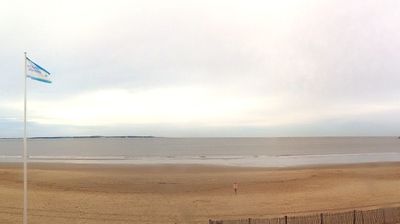
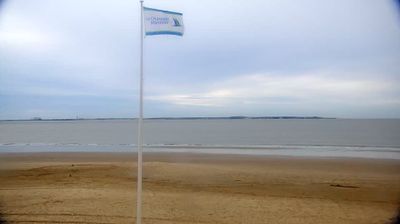

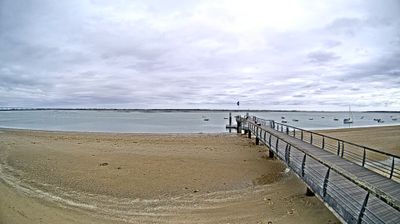

Saint-Georges-de-Didonne combines a broad Atlantic beach with the calmer waters of the Gironde estuary in a way that reflects its position on France’s Côte de Beauté. Set immediately south of Royan, the town follows the estuary shore as it opens westward towards the ocean. Sandy beachfront and residential streets give it the character of a long-established seaside resort, while the wooded Pointe de Suzac brings a more rugged coastal edge. The Vallières lighthouse, built in 1900, stands above the shore, and Pointe de Suzac retains Second World War fortifications. View additional webcams nearby to better understand how Saint-Georges-de-Didonne relates to the Côte de Beauté and the Gironde estuary.
3 webcams
The Atlantic coastline and the Garonne–Dordogne river basin define much of Nouvelle-Aquitaine, supporting vineyards, agriculture and enduring maritime trade. France’s largest region brings together the surf beaches and pine forests of the Landes, the wine country around Bordeaux, and the limestone valleys of the Dordogne. The Charente passes through Angoulême, near this location; the city is internationally associated with its annual comics festival. Bordeaux also preserves the UNESCO-listed historic centre known as the Port of the Moon, recalling its role in Atlantic commerce. Cognac production in the Charente adds another internationally recognised local tradition. Browse related webcams around Nouvelle-Aquitaine to form a broader impression of this varied region.
120 webcams
The Atlantic and Mediterranean coastlines, together with the Alps, Pyrenees and broad river basins, define much of France — they support maritime trade, farming, wine regions and travel throughout the year. The Seine runs through Paris, where the Eiffel Tower and the Louvre are among Europe’s most recognised landmarks. The Loire Valley is known for Renaissance châteaux, while Mont-Saint-Michel rises from a tidal bay in Normandy. Regional food traditions are equally distinctive, from Breton seafood to Provençal cooking, with bread, cheese and wine central to everyday life. France’s global cultural influence is evident in its language, literature, fashion and cinema. View additional webcams nearby to better understand how France’s coasts, plains and mountain borders relate to their surroundings.
2.1K webcams