 Sibenik: Water Clock - Poljana - St. Michael's Fortress
Few places in Dalmatia have a history as closely tied to Adriatic maritime trade and defence as Šibenik. Poljana forms a civic space below St. Michael’s Fortress, the medieval stronghold on the hill above the old town; the Water Clock is among its contemporary features. Šibenik developed where the Krka meets the Adriatic, with steep streets and pale stone houses climbing from the waterfront. The city is particularly associated with the Cathedral of St James, a UNESCO World Heritage site built in the 15th and 16th centuries and renowned for its entirely stone construction. St Michael’s Fortress belongs to a wider system of fortifications reflecting Šibenik’s strategic role on the central Dalmatian coast.
Generated by AI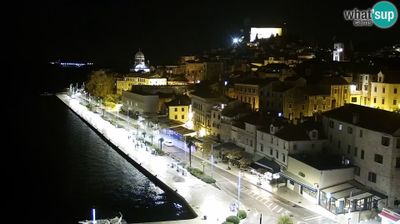
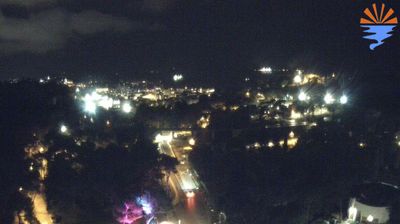
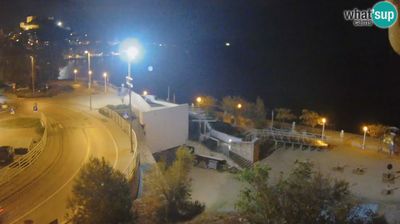
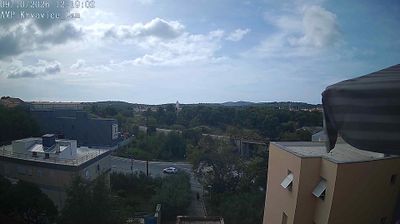


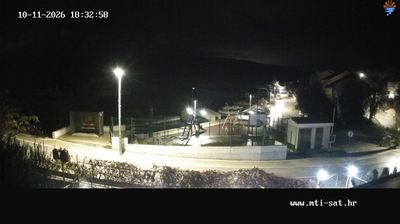
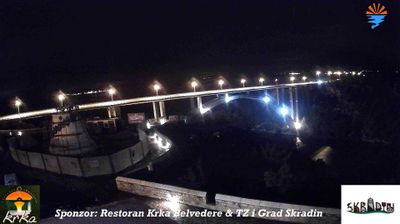
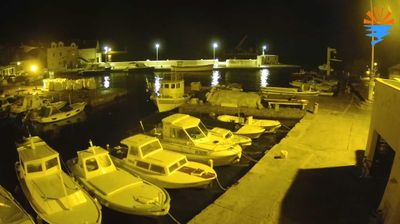

Tucked along the Adriatic coast at the mouth of the Krka River, Šibenik is a city whose character is shaped by its sheltered harbour and the narrow channels leading toward the open sea. Stone lanes rise from the waterfront to the Cathedral of St James, a UNESCO World Heritage site built during the 15th and 16th centuries; its exterior carries a frieze of 71 carved heads. The Channel of St Anthony leads seaward past St Nicholas Fortress, part of a UNESCO-listed Venetian defensive system. Continue through nearby webcams to explore different parts of Šibenik and the Šibenik-Knin County coast.
7 webcams
Šibenik-Knin County stretches from the Adriatic coast and island-dotted archipelago to the Dinara mountain hinterland, encompassing karst plains, river canyons and maritime islands. Its county seat, Šibenik, stands at the mouth of the Krka River and is known for the Cathedral of St James, a UNESCO World Heritage site built entirely of stone. Krka National Park follows the river through waterfalls and lakes, while Kornati National Park protects a striking cluster of mostly barren islands west of the mainland. Coastal towns, island settlements and inland Knin give the county a distinctly varied Dalmatian character. Discover how Šibenik-Knin County connects with the surrounding Croatian coast by browsing nearby webcams.
28 webcams
Croatia occupies a long Adriatic coastline in southeastern Europe. Its shore is broken into islands and sheltered coves, while the Dinaric Alps rise inland and the Danube forms part of its eastern border. Dubrovnik’s fortified old city faces the sea, and Split grew around Diocletian’s Palace, a Roman complex begun in the early fourth century. Inland, Plitvice Lakes National Park is known for terraced lakes linked by waterfalls and has been a UNESCO World Heritage Site since 1979. Istrian olive groves, Zagreb and Slavonia’s vineyards reveal distinct regional identities. Explore nearby webcam locations that provide complementary perspectives on the Adriatic coast and Croatia’s interior.
363 webcams