 Villa de Mazo: Santa Cruz de La Palma
The Atlantic Ocean defines the setting of Santa Cruz de La Palma — the island capital rises from a historic waterfront onto La Palma’s eastern slopes. Founded by the Castilian Crown in 1493, the port became an Atlantic trading post, a role reflected in the old town’s compact grid and traditional Canary Islands balconies. Calle O’Daly and Calle Anselmo Pérez de Brito form its principal historic streets, while the seafront and harbour connect the city with the rest of the archipelago. Above the centre, residential districts follow the steep terrain; beyond them, the island climbs toward the Caldera de Taburiente, the vast erosion crater that shapes La Palma’s interior. Santa Cruz remains La Palma’s administrative capital and an introduction to the island’s maritime urban character.
Generated by AI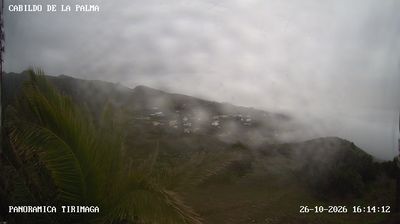

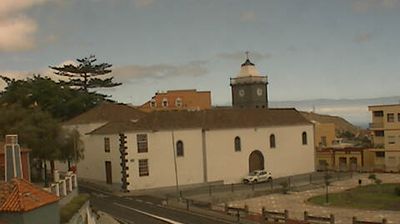


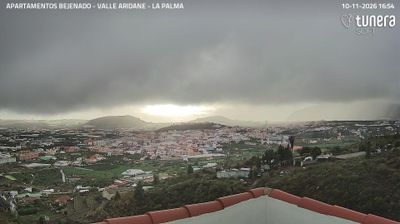
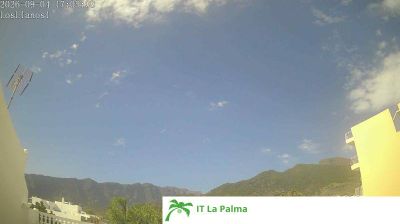
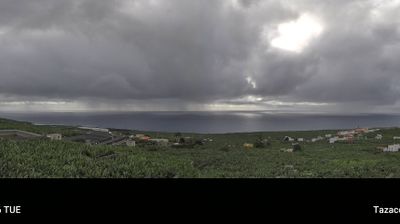
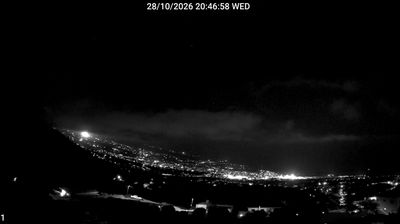


Villa de Mazo has served as an agricultural centre on the Canary Island of La Palma since the early modern era. Spread across La Palma’s eastern slopes above the Atlantic Ocean, the municipality joins cultivated terraces and small settlements with a rugged volcanic coastline. Changes in altitude between the shore and uplands shape its rural character. Villa de Mazo is particularly known on La Palma for its Corpus Christi observance, when temporary arches and street carpets made from plant material decorate the settlement. The festival brings local craft traditions into public view each year. Explore nearby webcam locations that provide complementary perspectives on Villa de Mazo and La Palma.
2 webcams
The Canary Islands have served as an Atlantic crossroads within Spain since the fifteenth century. This volcanic archipelago lies off northwestern Africa, where the Atlantic Ocean, trade winds and sharply varying terrain shape climates ranging from dry coasts to cool uplands. Tenerife is home to Mount Teide, Spain’s highest peak, while the Teide National Park is a UNESCO World Heritage Site. Across the islands, black-sand shores, lava fields and cultivated slopes reflect their volcanic origins. Carnival traditions, especially those of Santa Cruz de Tenerife, remain an important part of the local calendar. View additional webcams nearby to better understand how the Canary Islands relate to the Atlantic and to one another.
63 webcams
Spain extends from the Cantabrian coast to the Canary Islands, encompassing Atlantic shores, Mediterranean beaches and the broad interior Meseta. The Pyrenees form its northeastern frontier, while the Guadalquivir crosses Andalusia on its way to the Atlantic. Madrid anchors the country’s political and cultural life, but distinct regional identities are central to Spain’s character: Catalonia, the Basque Country, Galicia and Andalusia each have their own languages or strong local traditions. Granada’s Alhambra is a major monument of the medieval Nasrid dynasty, and Santiago de Compostela remains the destination of the Camino de Santiago. Browse related webcams around the Iberian Peninsula to build a fuller picture of Spain.
1.4K webcams