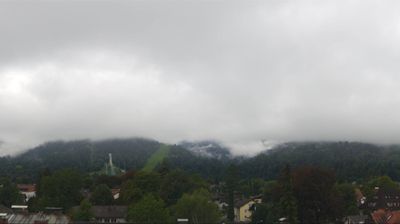
 Garmisch-Partenkirchen: Kreuzeck Bergstation - Garmisch-Classic - Blick zur Alpspitze und Zugspitze
Tucked into the northern fringe of the Wetterstein Mountains, Kreuzeck is a place whose character is shaped by steep, forested slopes above Garmisch-Partenkirchen. It forms part of the Garmisch-Classic mountain area, a long-established skiing and excursion zone on the Bavarian side of the Alps. The sharply pointed Alpspitze rises close to the ridge, while the Zugspitze, Germany’s highest mountain, anchors the wider Wetterstein range. Below, Garmisch-Partenkirchen occupies the meeting of Alpine valleys and hosted the 1936 Winter Olympics. Managed mountain meadows, conifer woodland and pale limestone give this section of the range a distinctly Alpine character, closely linked to the town’s mountain-sport tradition.
Generated by AI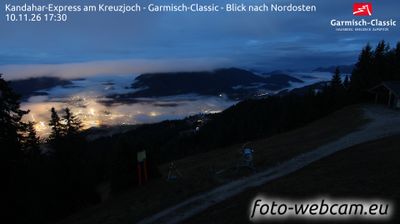
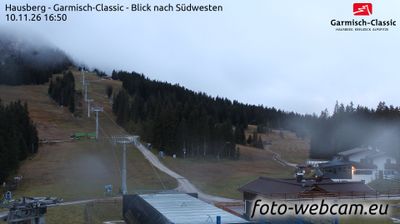

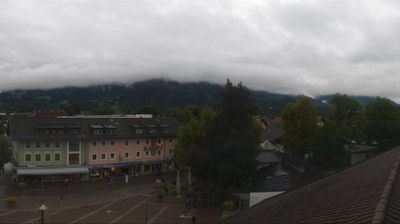

Built around settlements on the old route through the Loisach valley, Garmisch-Partenkirchen grew into one of Bavaria’s principal Alpine resorts. The twin town lies below the Wetterstein range, with the Zugspitze, Germany’s highest mountain, close by. Partenkirchen retains painted façades along Ludwigstraße and associations with the Roman Via Claudia Augusta, while the Partnach Gorge cuts through rock south of town. Garmisch-Partenkirchen hosted the 1936 Winter Olympics, cementing its long connection with winter sport. Hiking routes, ski slopes and the Bayerische Zugspitzbahn keep the town closely linked to its mountain setting. Browse additional webcams from the surrounding area to extend your view of the Bavarian Alps.
12 webcams
Built around the early medieval Duchy of Bavaria, Bavaria grew into Germany’s largest federal state. The Danube crosses its broad centre, while the Bavarian Alps form its southern edge and include the Zugspitze, Germany’s highest mountain. Munich is the state capital and the home of Oktoberfest, a festival rooted in an 1810 royal wedding. Beyond the metropolis, Franconia’s vineyards, Swabian towns and Alpine resorts reveal how varied this part of Germany can be. Browse additional webcams from the surrounding area to extend your view of Bavaria.
873 webcams
Germany stretches from the North Sea and Baltic Sea coasts to the Alps on its southern border, encompassing northern plains, river valleys and forested uplands. The Rhine, Danube and Elbe have long connected its regions, while the Black Forest and Bavarian Alps give the south a more dramatic relief. Berlin’s Brandenburg Gate and Museum Island reflect the capital’s role in German history and culture. Cologne Cathedral, a UNESCO World Heritage Site, rises above the Rhine, and the Bauhaus movement, founded in Weimar in 1919, transformed modern design far beyond Germany. Regional cooking, Christmas markets and brewing traditions bring further character to daily life. Browse additional webcams from the surrounding area to extend your view of Germany.
2.8K webcams