 Grainau: Wachterhaus Ferienwohnung
Hammersbach combines a quiet valley settlement with rugged alpine terrain in a way that reflects its position at the foot of the Wetterstein Mountains. Part of the Grainau municipality in Upper Bavaria, it lies southwest of Garmisch-Partenkirchen, close to the Austrian border. The Hammersbach stream has cut the Höllentalklamm, a steep-sided gorge that forms the start of the Höllental route towards Zugspitze, Germany’s highest mountain. This is a landscape of forests, meadows and sharply rising limestone slopes. Traditional Bavarian alpine houses and small-scale farming remain an important part of the settlement’s character, even though the wider valley is closely tied to mountain tourism.
Generated by AI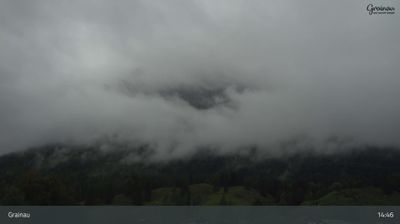
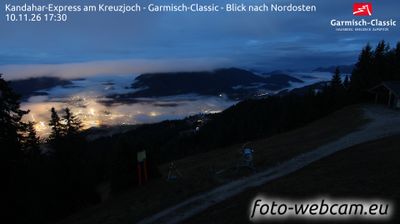

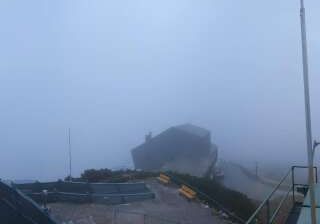
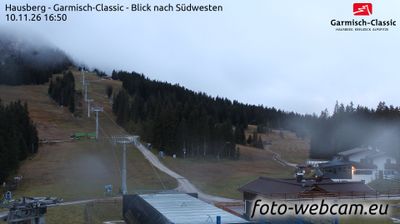
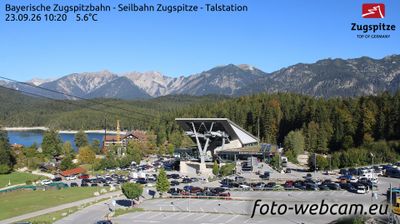
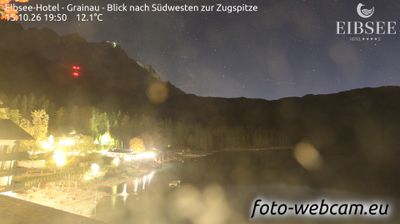
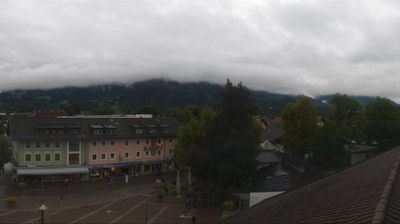

Grainau combines the calm pace of an Alpine settlement with the presence of Germany’s highest peak, reflecting its position beneath the Zugspitze in the Bavarian Alps. The municipality rises from wooded valley ground toward the Wetterstein range, and Lake Eibsee lies at the mountain’s foot. Hammersbach, a district of Grainau, is the starting point for the Höllentalklamm gorge and routes into the Höllental valley. Opened in 1930, the Bavarian Zugspitze Railway runs through Grainau on its way from Garmisch-Partenkirchen to the Zugspitzplatt plateau. Discover other points of interest through webcams located across Grainau and the Bavarian Alps.
16 webcams
Built around the early medieval Duchy of Bavaria, Bavaria grew into Germany’s largest federal state. The Danube crosses its broad centre, while the Bavarian Alps form its southern edge and include the Zugspitze, Germany’s highest mountain. Munich is the state capital and the home of Oktoberfest, a festival rooted in an 1810 royal wedding. Beyond the metropolis, Franconia’s vineyards, Swabian towns and Alpine resorts reveal how varied this part of Germany can be. Browse additional webcams from the surrounding area to extend your view of Bavaria.
873 webcams
Germany stretches from the North Sea and Baltic Sea coasts to the Alps on its southern border, encompassing northern plains, river valleys and forested uplands. The Rhine, Danube and Elbe have long connected its regions, while the Black Forest and Bavarian Alps give the south a more dramatic relief. Berlin’s Brandenburg Gate and Museum Island reflect the capital’s role in German history and culture. Cologne Cathedral, a UNESCO World Heritage Site, rises above the Rhine, and the Bauhaus movement, founded in Weimar in 1919, transformed modern design far beyond Germany. Regional cooking, Christmas markets and brewing traditions bring further character to daily life. Browse additional webcams from the surrounding area to extend your view of Germany.
2.8K webcams